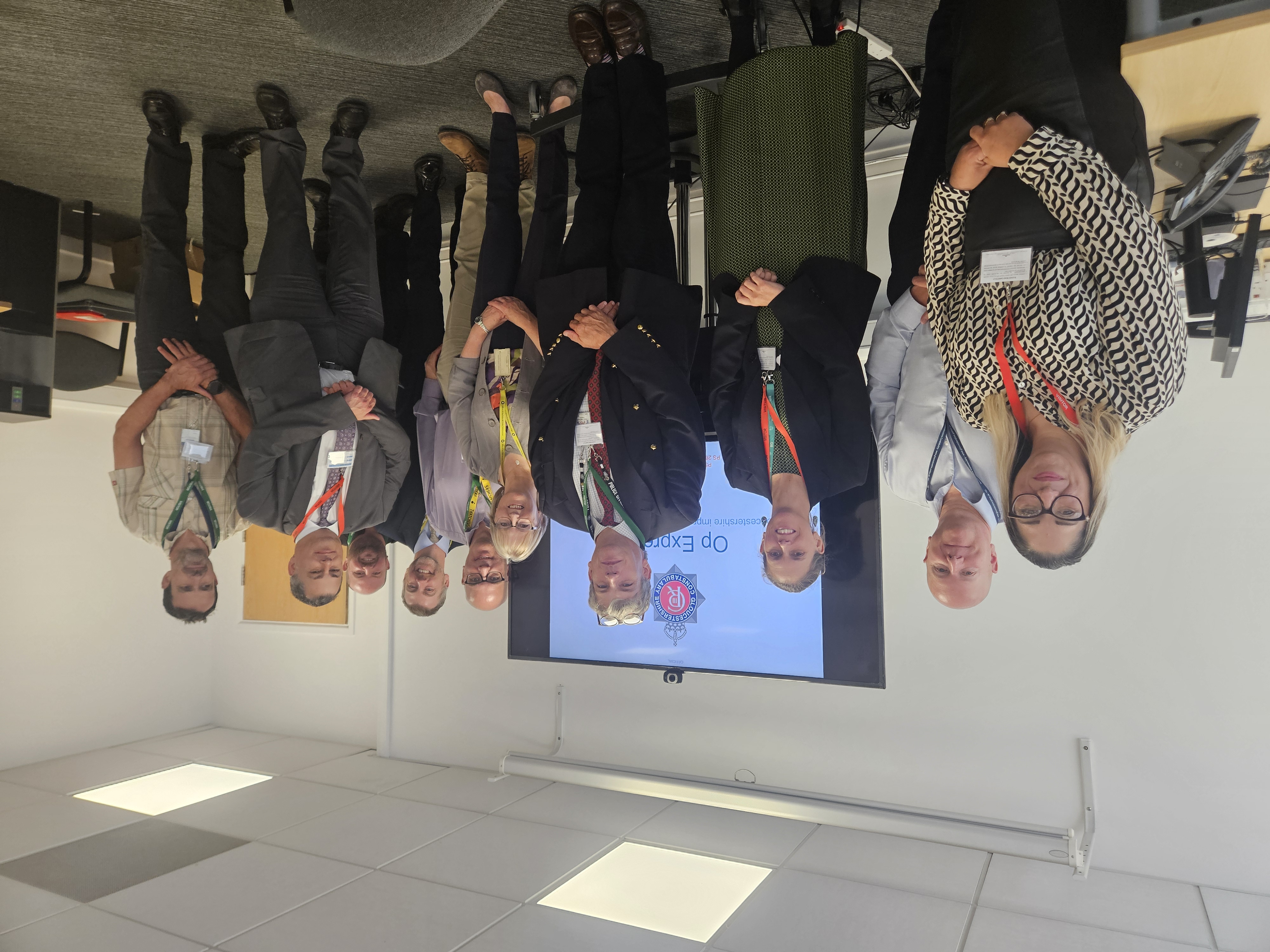
On the road with the NBCC team in September 2026
September has been another busy and productive month for the National Business Crime Centre (NBCC), with a continued focus on supporting retailers, strengthening partnerships, and delivering practical solutions to help prevent retail crime and protect those working across the sector.
At the heart of our work is collaboration. Whether engaging with retailers, police forces, government departments, Business Improvement Districts (BIDs), Business Crime Reduction Partnerships (BCRPs) or industry bodies, every conversation helps to build a clearer understanding of the challenges facing businesses and the opportunities to create safer retail environments. By listening, sharing experiences, and working collectively, we can continue to develop approaches that support prevention, improve confidence in reporting and help reduce harm.
This month also brought some exciting additions to the team. We are delighted to welcome Police Sergeant Dave Catlow, who joins the NBCC on secondment from the Metropolitan Police. Dave brings extensive expertise in tackling tool theft and will be supporting work aimed at disrupting both theft and the illicit resale of stolen goods. We are equally pleased to welcome Hannah Pang, a Sociology student from the University of Bath, who has joined us on a 30-week placement. Hannah will be undertaking research and stakeholder engagement to support the Tackling Retail Crime Together Strategy, helping us build the evidence base needed to inform future activity and policy development.
Engagement with retailers continues to be a key priority. During September, team members attended several executive insight events focused on the fashion and grocery sectors. These sessions provided valuable opportunities to hear directly from industry leaders about emerging challenges, operational concerns and innovative approaches being adopted across retail. Such discussions are invaluable, allowing us not only to better understand the issues that matter most to retailers but also to share updates on national workstreams and identify new ideas that can be developed through partnership working.
The importance of partnership was also demonstrated through our continued work on tackling tool theft. Lisa and Dave had the opportunity to meet with Policing Minister Sarah Jones MP to discuss the progress being made in this area and the wider efforts to support victims and prevent offending. Tool theft remains a significant issue affecting tradespeople and businesses across the country, and collaboration between policing, government and industry remains essential in delivering meaningful change.
Sharing good practice across the retail sector remains a central element of the Tackling Retail Crime Together Strategy. During September, Titus and Superintendent Ryan Chapman, lead for the ‘What Works’ strand of the strategy, met with members of the British Retail Consortium to discuss ongoing activity and encourage retailers to share examples of successful interventions and initiatives. Across the country, retailers are developing innovative responses to crime and anti-social behaviour, often achieving excellent results through local partnerships and targeted prevention measures. By capturing and sharing these examples, we can help others learn from success and accelerate the adoption of approaches that make a genuine difference.
The NBCC also continued its support for BIDs and BCRPs, organisations that play a vital role in creating safer town and city centres. These partnerships help coordinate intelligence sharing, organise local activity, identify emerging threats and ensure that the voices of businesses are represented within wider community safety discussions. This month the team attended the Southwest BCRP Regional Meeting hosted by Gloucestershire Constabulary, while also engaging with colleagues from Sunderland BID to discuss local priorities and opportunities for joint working. These partnerships continue to demonstrate the power of collective action in tackling issues that no organisation can solve alone.
One of the highlights of the month was supporting local Fight Back Against Retail Crime events. These events provide an excellent opportunity for retailers to hear directly from local policing teams; understand crime trends affecting their area and explore practical crime prevention solutions. They also help strengthen local networks and encourage the sharing of knowledge between businesses facing similar challenges. Titus had the privilege of attending the Harrogate event, where local retail staff, police, BID representatives, and security providers came together with a shared commitment to improving safety and reducing crime.
Prevention remains a key theme running throughout all our work. Rachael has continued to lead efforts relating to drug and alcohol diversion programmes, engaging with the Lancashire PCC team and participating in discussions focused on reducing reoffending through effective diversion approaches. Evidence increasingly shows that addressing the underlying causes of offending can deliver long-term benefits for communities, businesses, and individuals alike. As part of this work, she attended an online seminar exploring the implementation, impact and cost-effectiveness of police drug diversion programmes across England to support prevention and reduce future offending. Led by Professor Alex Stevens from the University of Sheffield.
Knowledge sharing remains another important part of our work. This month, the NBCC hosted a further online Knowledge Series event featuring Louis Casey-Gibbs from SelectaMark DNA, who shared experiences of how forensic marking technologies are being used to deter offenders, identify stolen property, and support criminal investigations. Sessions such as these help retailers learn about practical tools and innovations that can complement broader crime prevention strategies.
Work also continues at pace on the development of a national direct-to-police reporting process for retailers. The NBCC is working closely with Digital Public Contact and the Metropolitan Police Service to develop a solution that simplifies reporting, improves the user experience and strengthens confidence in the reporting process. The project aims to deliver efficiencies for policing while providing retailers with a more intuitive and tailored route for reporting incidents, ultimately supporting better intelligence and a clearer understanding of retail crime trends nationally.
Looking ahead, we are particularly excited about the development of a new reputable business scheme being designed in partnership with the Retail Trust and the National Association of Business Crime Partnerships. The scheme will focus on promoting effective crime prevention practices, encouraging meaningful crime reporting, supporting retail workers who have experienced abuse or violence, and strengthening engagement with local BIDs and BCRPs. While work is still in its early stages, we believe the initiative has the potential to make a significant contribution to improving safety, resilience, and wellbeing across the retail sector.
As always, we would like to thank retailers, police forces, BIDs, BCRPs, local authorities and partner organisations for their continued support and engagement. Tackling retail crime requires a collective effort, and the progress being made nationally is only possible because of the willingness of partners to work together, share experiences and remain committed to creating safer environments for staff, customers, and communities.
If you have examples of successful projects, innovative prevention initiatives or local partnership approaches that could benefit the wider retail community, we would love to hear from you. Together, we can continue to identify what works, share learning and build a stronger, safer retail sector for everyone.
